Getting there
How to get to Dolmabahçe Palace
How to reach Dolmabahçe Palace in Beşiktaş: the T1 tram to Kabataş, the funicular from Taksim, ferries to Kabataş or Beşiktaş, and the last stretch.
Book your palace visit ↗Quick answer
The simplest way to reach Dolmabahçe Palace is the T1 tram to its Kabataş stop, followed by a walk along the waterfront. From Taksim Square the F1 funicular runs down to Kabataş. Public ferries call at the Kabataş and Beşiktaş piers, which suits visitors crossing from the Asian shore. The palace is on Dolmabahçe Caddesi in Beşiktaş, on the European side of the Bosphorus, and none of the palace tickets include transport.
Where the palace is
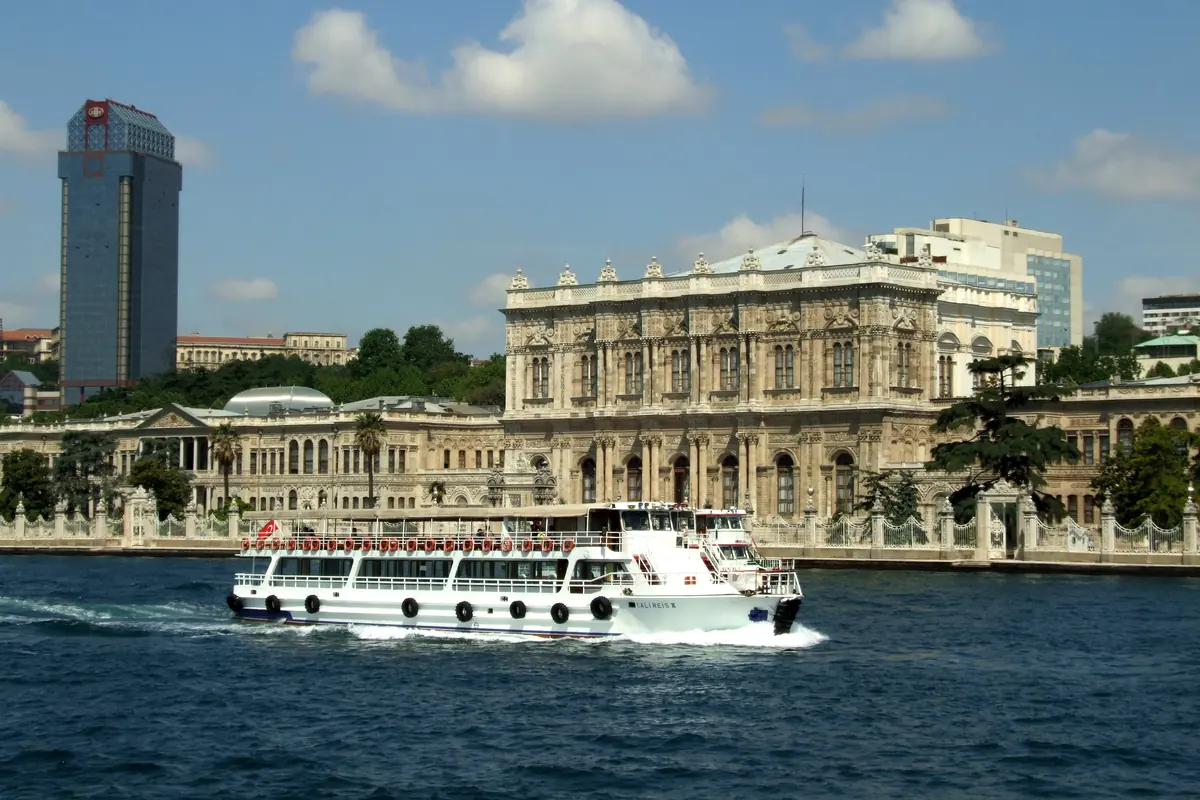
Dolmabahçe Palace stands on the European shore of the Bosphorus, in Istanbul's Beşiktaş district, and its address is Dolmabahçe Caddesi. The Dolmabahçe quarter lies between Kabataş to the south and the Valideçeşme area to the north. The district itself runs along the European shore from Dolmabahçe in the south to the Bebek area in the north. The long façade runs along the water, and the Dolmabahçe Mosque and a clock tower stand on the waterfront square beside it. That square is where this guide sends you, because the tram, the funicular and the ferries all end close to it, at Kabataş or at the pier in Beşiktaş. If you can see the strait and a clock tower, you are in the right place.
Which way in from where you start
Four starting points cover most visitors. The table sets each one against the route that suits it, and the sections after it explain how each route works. The tram, the funicular and the ferries all take the same contactless card, and all of them end on the same waterfront, so a missed connection costs little. In every case the last stretch is the same: a walk along the waterfront between Kabataş, or the pier at Beşiktaş, and the palace gate. Pick the row that matches where you are staying and ignore the rest. Two of the routes, the tram and the funicular, are run by Metro Istanbul, and the ferries by the municipal company and private operators.
Routes to the palace
| Starting point | Best way in | Then |
|---|---|---|
| Eminönü | T1 tram | Get off at Kabataş |
| Taksim Square | F1 funicular | Down to Kabataş |
| Karaköy | T1 tram | Across the Galata Bridge |
| Asian shore | Public ferry | Land at Kabataş or Beşiktaş |
By tram: the T1 to Kabataş
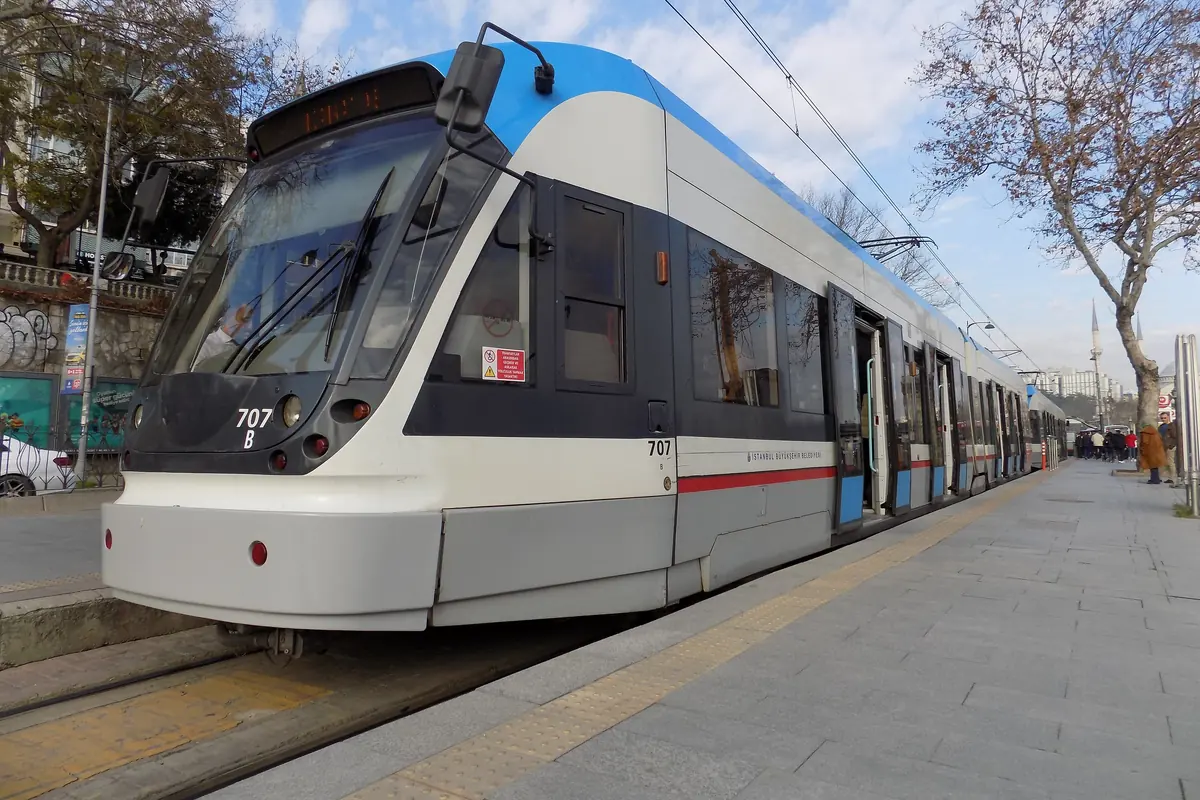
The T1 is the Istanbul tram line that ends at Kabataş, and Metro Istanbul operates it. Kabataş is the end of the line nearest the palace. A visitor starting in the old city can reach the Bosphorus shore on a single line. The same line crosses the Galata Bridge, so travellers coming from Karaköy ride it too. The platforms are set for low-floor, air-conditioned trams, which helps with luggage. Pay with an Istanbulkart, because cash is not possible on these systems.
Read next: Dolmabahçe and the Bosphorus
From Taksim: the funicular to Kabataş
The F1 funicular links Taksim Square with Kabataş and is also run by Metro Istanbul. It opened in 2006, and the ride takes only a few minutes. Kabataş station lies under Meclis-i Mebusan Avenue in the northeast of Beyoğlu and is the lower end, with the T1 tram, ferry service and city buses connecting on the surface. The station has become an important transfer point between ferry and rapid transit. If you are staying around Taksim, the funicular is a short way down to the water, and you finish the trip on foot along the shore. The Doppelmayr Garaventa Group built it, and it is one of the shortest rides on any route to the palace.
By ferry: Kabataş and Beşiktaş piers
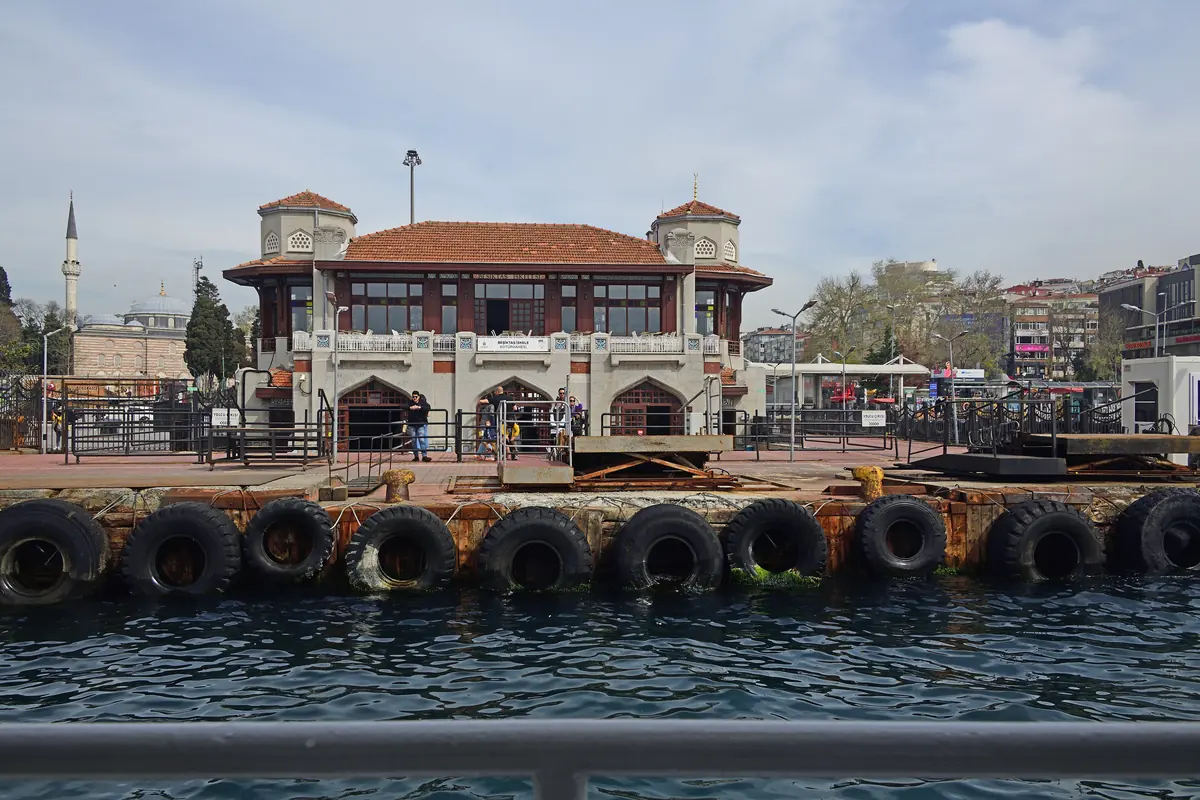
Public ferries call at both Kabataş and Beşiktaş, and both piers sit on the palace's stretch of shore. Şehir Hatları, the municipal operator, traces its history to 1851. Its lines and private operators' boats link these piers with the Asian shore, including Kadıköy. Lines and timetables change, so check the operator's current timetable before you plan around one. Ferries accept the Istanbulkart. Ferries have crossed the Bosphorus since the first private steamers of 1837, so the crossing has a long history of its own.
Paying with an Istanbulkart
The Istanbulkart, introduced in 2009, is a contactless card valid on buses, funiculars, trams, the metro and public ferries, and cash payment is not possible on those systems. You hold it to the reader as you board or at the station gate. A card can be shared, and up to five people can travel on one card by tapping it one after another. Cards are sold at offices at major transport interchanges and from vending machines at metro entrances, for a deposit and a loaded balance, and they can be topped up at machines, newsstands and small shops. Buy one before your first ride, since a single card covers every route in this guide.
The last stretch and the gate
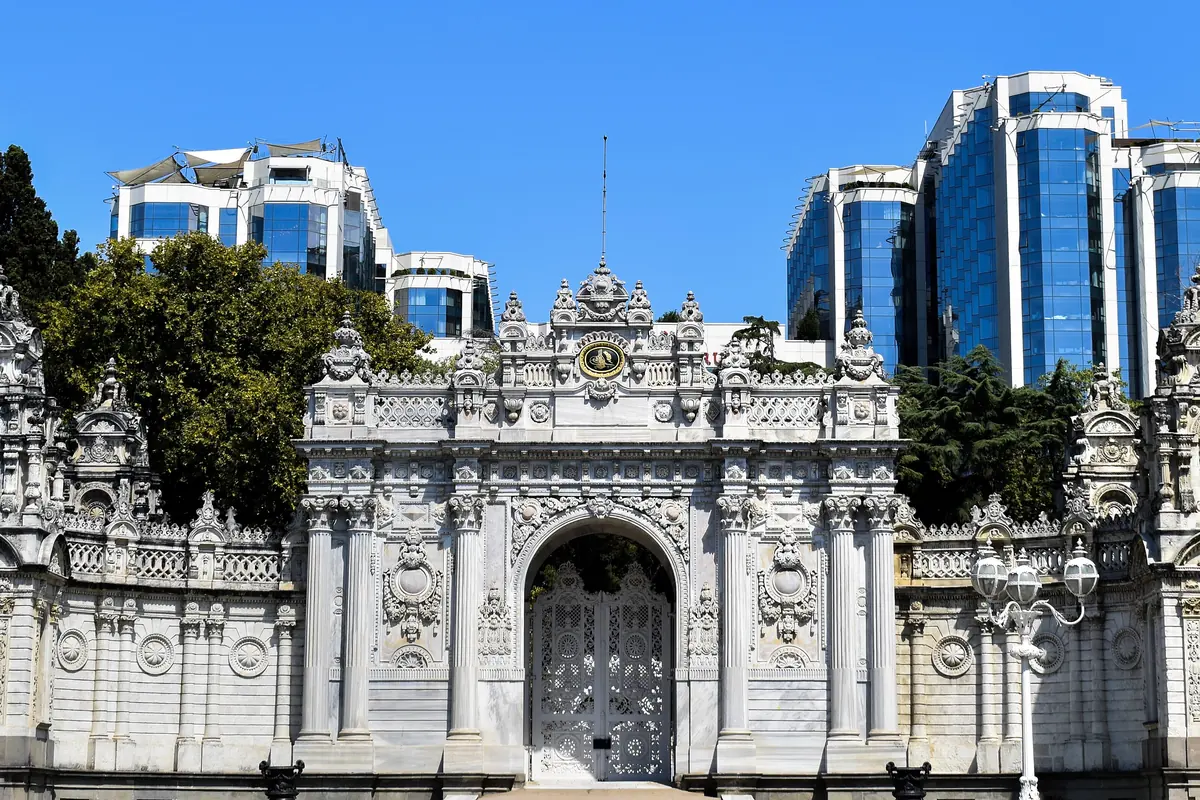
From Kabataş or the Beşiktaş pier, follow the shoreline road to the palace and look for the clock tower. It stands on the waterfront square beside the Dolmabahçe Mosque and dates from 1890 to 1895, when the court architect Sarkis Balyan designed it. The palace grounds cover about 110,000 square metres, with the Bosphorus on the east side and a steep slope on the west, so the approach runs along the shore. The palace has monumental gates, among them the Sultan's Gate and the Treasury Gate. Every visitor goes through a security check, which is separate from the ticket line, so allow for it when you work out when to leave.
What to have ready at the entrance
Carry a passport or an ID card. On the GetYourGuide tickets that include an audio guide device, you leave that document as a deposit and collect it when you hand the device back. Children aged 0 to 6 are eligible for free admission, and the child's passport must be shown at the entrance to receive the free ticket. The entry QR codes arrive by email, one day before the visit or at once for same-day bookings, and one ticket sends its entry code separately on the day, so keep the email handy and look in your spam folder. Last admission is one hour before closing, so plan to arrive well before it.
- A passport or ID card for the audio guide deposit
- The entry QR code from your confirmation email
- An Istanbulkart or another way to pay the fare
- A child's passport, if a child aged 0 to 6 is coming free
- Headphones, if your audio guide is a link
Door to door: taxis and transfers
A taxi is the simplest door-to-door option from any hotel, and it removes the question of which stop or pier is closest, which matters most with luggage or small children, or when the day is wet. From the Asian side a taxi crosses the strait by one of its three bridges or by the undersea road tunnel, so the ferry is the alternative worth comparing. None of the palace tickets in this guide include a transfer or a meeting point. The Istanbul E-pass ticket is not guided, so you go to the palace and enter on your own with the tickets you were sent.
Arrive by tram, leave by water
Because the tram stop and the ferry piers are close to each other, the trip does not have to be the same in both directions. A common pattern is to ride the T1 to Kabataş in the morning, spend the visit inside, and then leave by ferry from Kabataş or Beşiktaş, which gives you a first look at the shore from the water. Ferries call at both piers, so either one will do. The reverse works too. Whichever way round you go, you only need one Istanbulkart, and the choice can wait until you see the weather on the day. Neither direction needs a separate ticket for the transport, since the card covers both.
Who this isn't for
These tickets are entries with an audio guide, so they suit nobody who expects a guide to meet them and walk them round. Anyone who needs hotel transport should choose a tour that includes it, because none of these tickets do. Anyone who likes every detail settled in advance should know that reviewers of one ticket report a voucher that would not scan at the gate and an information desk that sorted it out. And if you are arriving on the palace's weekly closing day, no route in this guide will get you in, so check the closing day before you plan the trip. Check the palace's own website for its current visiting information.
Read next: Best time to visit Dolmabahçe
Frequently asked questions
Which tram stop is closest to Dolmabahçe Palace?
Kabataş, the end of the T1 line, is the stop for the palace. The T1 runs from Kabataş to Bağcılar via Eminönü, and the funicular from Taksim Square also ends at Kabataş.
Can I take the funicular from Taksim?
Yes. The F1 funicular runs between Taksim Square and Kabataş, and the ride takes 2.5 minutes. From Kabataş you continue on foot along the waterfront to the palace.
Do ferries stop near the palace?
Yes. Public ferries call at the Kabataş and Beşiktaş piers, both on the palace's stretch of the shore. Check the operator's timetable for your line, because lines change.
Can I pay with cash on public transport?
Not on trams, funiculars, buses, the metro or public ferries. They take the Istanbulkart, a contactless card sold at interchange offices and from vending machines at metro entrances.
Is the palace in Beşiktaş or in Beyoğlu?
Its address is in Beşiktaş. The neighbouring Kabataş area, where the tram and the funicular end, lies in the Beyoğlu district, which is why the mosque beside the palace is often placed in Kabataş.
Do the palace tickets include transport?
No. They are entries with an audio guide. The Istanbul E-pass ticket is not guided and has no meeting point, so you travel to the palace and enter on your own.
Sources