Inside the palace
What to see in Dolmabahçe Palace
A walk through Dolmabahçe Palace in the order of the building: the state rooms, the Crystal Staircase, the Ceremonial Hall, the Harem and Atatürk's room.
Book your palace visit ↗Quick answer
Dolmabahçe Palace has three parts: the Selamlık, where the state's business was done, the Harem, the private residence of the sultan's family, and the Ceremonial Hall between them. The highlights are the Crystal Staircase, the Ceremonial Hall under its great chandelier, the Harem apartments and the room in which Atatürk died. The GetYourGuide tickets cover the garden, the Selamlık and the Harem.
How the visit is laid out
The palace is one long block, divided into a southern Selamlık and a northern Harem, with the Ceremonial Hall between them. The GetYourGuide tickets in this guide name the garden, the Selamlık section and the Harem section. The combined ticket sold through the National Palaces also names a Painting Museum, so check what your own ticket covers. Which rooms open, and the order you walk them in, is set by the palace and can change, so use what follows as a guide to the building's layout and not as a fixed route.
The Medhal Hall and the state rooms
A visit begins in the Medhal Hall, the entrance hall of the Selamlık. Boulle tables stand on both sides of the room, topped with the tughra, the monogram, of Sultan Abdülmecid, and his monogram is also on the fireplace. The rooms facing the sea were used by the grand vizier and the other state ministers, and guests waited here until a protocol officer led them in. The Clerk's Hall, also called the Tiled Room, holds the largest painting in the palace collection, a depiction of the Surre Procession by Stefano Ussi, which shows the caravan that carried aid from Istanbul to Mecca.
The Crystal Staircase
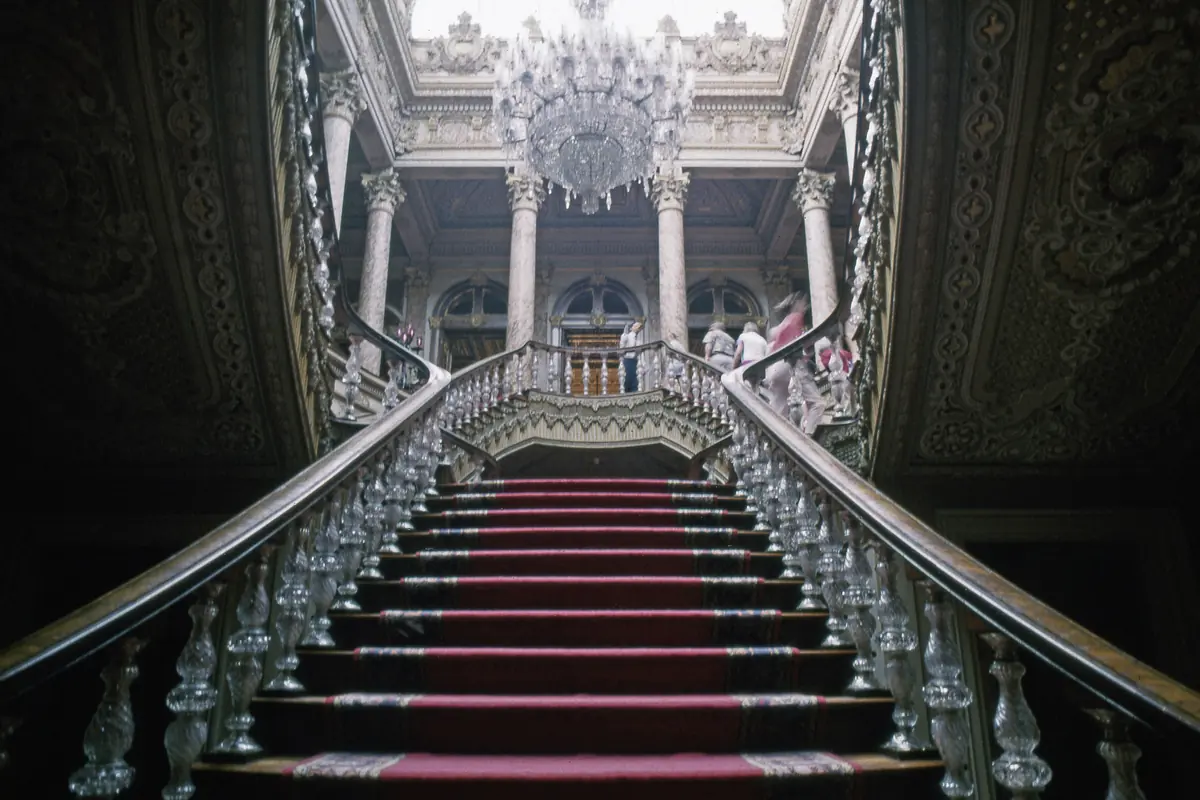
The Crystal Staircase is the best-known piece of the Selamlık. It has the shape of a double horseshoe, and it is built of Baccarat crystal, brass and mahogany. The palace is lavish with crystal, and it holds what is described as the most extensive collection of Bohemian and Baccarat chandeliers in the world,. Stop on the landing and look both up and down.
The Ceremonial Hall
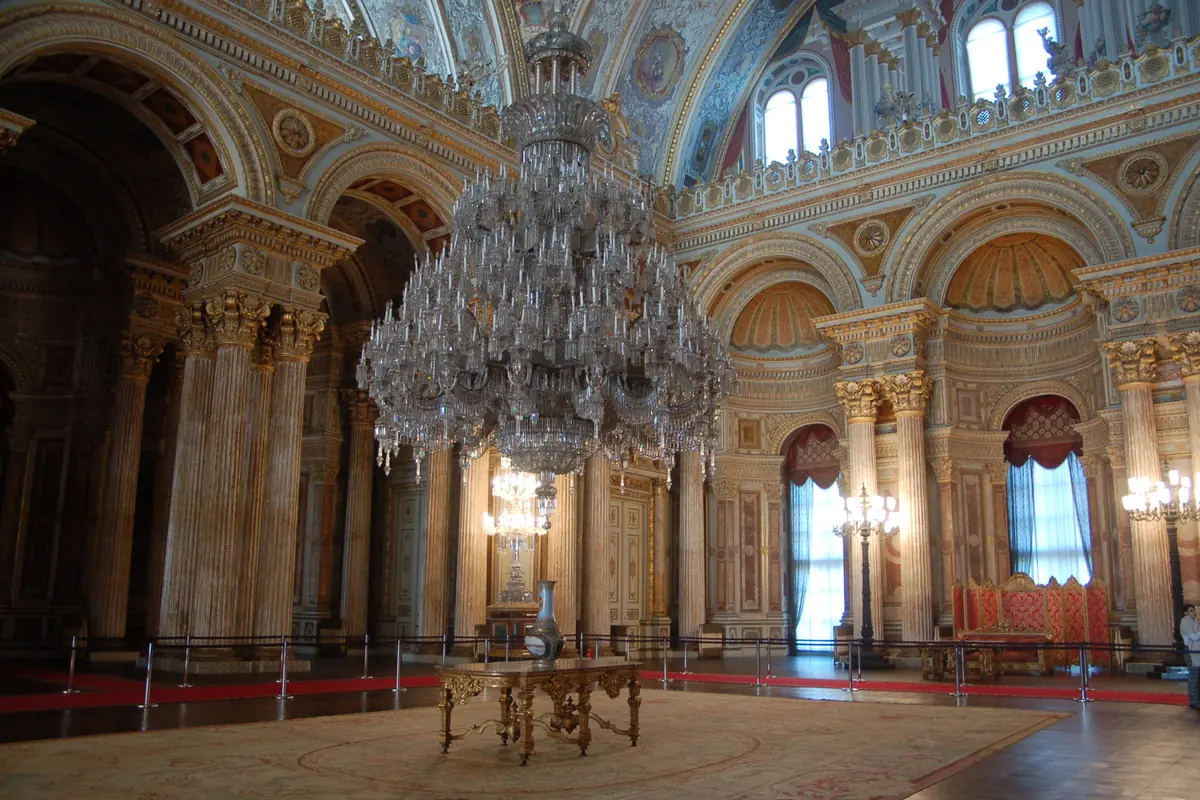
The Ceremonial Hall, in Turkish the Muayede Salonu, sits at the joint of the two wings. Its floor covers 2,000 square metres and its dome rises 36 metres. Under the dome hangs a crystal chandelier of 750 lamps and 4.5 tonnes, described as the world's largest of its kind, and the main hall also holds a Hereke carpet said to be the largest Hereke rug in the world. Bearskin rugs that Tsar Nicholas I presented to the sultan are also among the palace's furnishings.
Read next: Dolmabahçe Palace history
The Harem
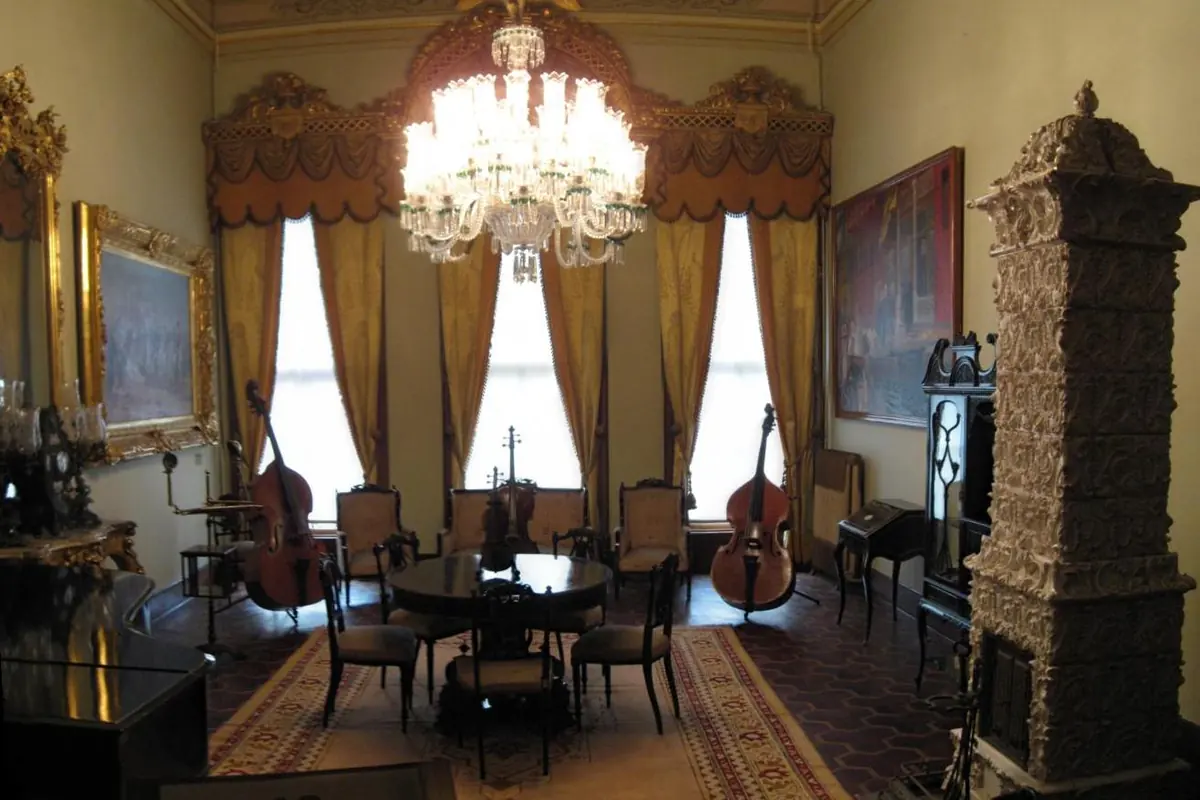
The Harem is the northern wing and was the private residential area of the sultan and his family, kept apart from the outside world. It has eight interconnected apartments, each with a bathroom, for the sultan's wives and favourites and for his mother, the Valide sultan. The wing also includes the rooms where the sultan's children were housed and educated, and the sultan's own living quarters. It is on the GetYourGuide ticket, so you do not need a separate one.
The room where Atatürk died
Atatürk died at 9:05 on the morning of 10 November 1938, in a bedroom in the former harem area. All the clocks in the palace were stopped at that time, and the clock in the room where he died still points to 9:05. Other clocks nearby show the actual time. The room is in the Harem section of the palace.
Paintings and objects
The palace displays a collection of 202 oil paintings, among them 23 by Ivan Aivazovsky, who worked as a court painter during his stays in Istanbul, and works by Gustave Boulanger, Jean-Léon Gérôme, Eugène Fromentin and the Turkish painter Osman Hamdi Bey. Gas lighting and water-closets from Great Britain were installed from the start, and the palace later gained electricity, central heating and a lift. Watch the clocks, the carpets and the ceilings as well as the rooms, because the gilding runs overhead throughout the building.
Who this isn't for
Visitors who expect to walk into every room should plan for less. Access to some areas, such as the sultan's own rooms and baths, depends on permission set by the palace management, so the route you are given may leave out rooms described here. And anyone hoping for a guided talk should remember that the tickets in this guide come with an audio guide device or a link and not a live guide.
Frequently asked questions
What are the main sights inside Dolmabahçe Palace?
The Crystal Staircase, the Ceremonial Hall with its great chandelier, the Harem apartments and the room in which Atatürk died are the best known.
How big is the Ceremonial Hall?
Its floor covers 2,000 square metres and its dome is 36 metres high. It sits between the Selamlık and the Harem.
Is the Harem included in the ticket?
Yes. The GetYourGuide tickets in this guide cover the Harem section along with the Selamlık and the garden.
Does the palace have an art collection?
Yes. A collection of 202 oil paintings is on display, including 23 by Ivan Aivazovsky.
What does the clock at 9:05 mean?
Atatürk died at 9:05 on 10 November 1938, and the palace clocks were set to that time. The clock in his room still shows it.
Sources